Checking stock through WhatsApp with AI requires the agent to identify a product and query an authorized inventory source before answering. WhatsApp carries the conversation; availability comes from an ERP, inventory platform or other source designated by the business. An AI model alone does not know current stock levels.
This use case is narrower than using WhatsApp as an interface to business processes. Here, the operational challenge is avoiding the wrong product, stale quantities and delivery promises that the system cannot support.
The path of a real stock question
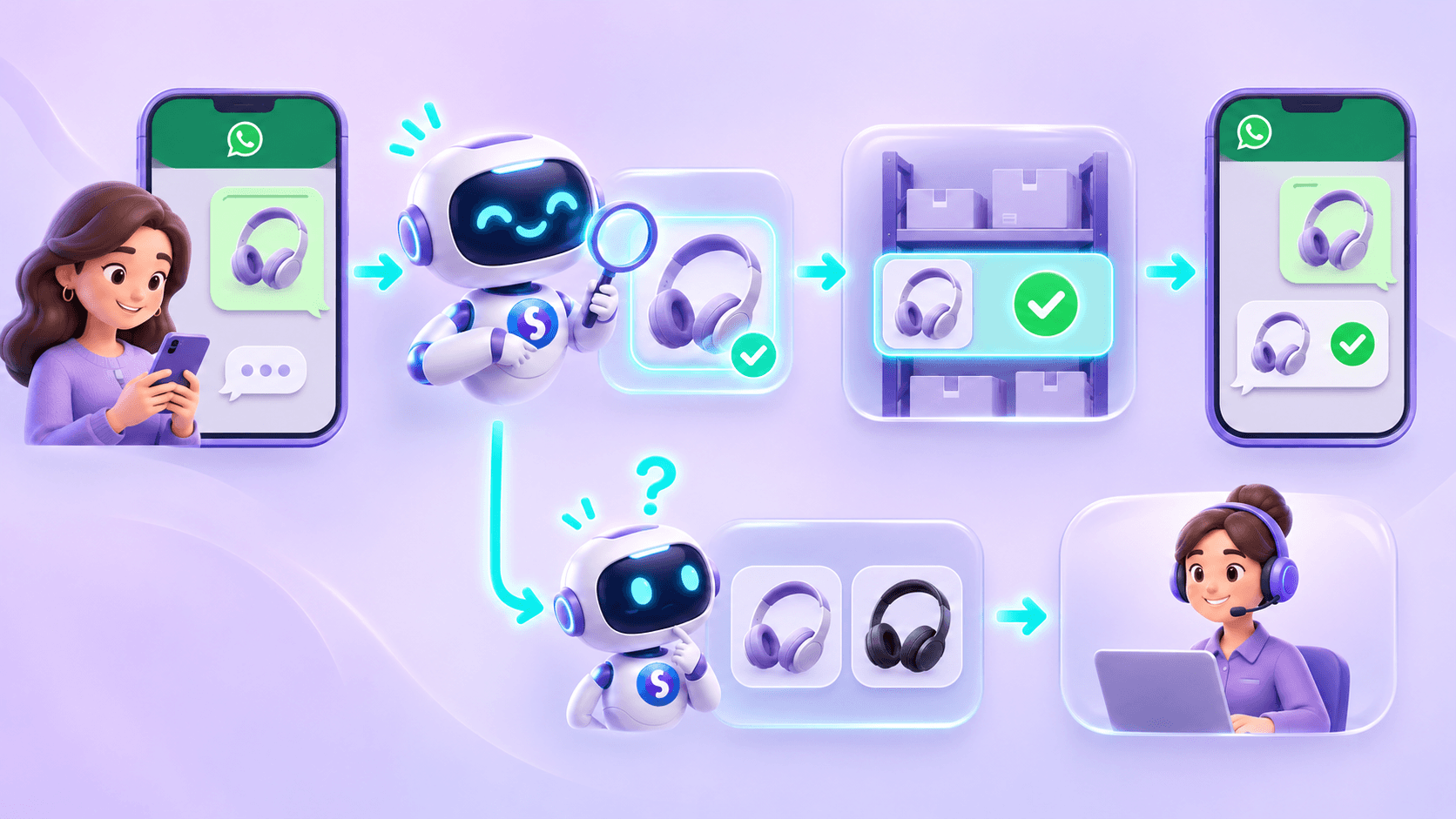
Imagine a customer writes, “Do you have twenty units of model ABC123 for pickup tomorrow?” A responsible implementation follows a verifiable path:
- Receive the message through the company's configured WhatsApp channel.
- Extract the product code, quantity and pickup requirement; ask if an essential detail is missing.
- Search the catalog and confirm that the code identifies one specific variant.
- Query sellable quantity from the authorized source, accounting for reservations or location if needed.
- Reply within the scope of the verified data, without confirming pickup or delivery unless that has also been checked.
If several products look alike, the agent should offer options or request another identifier. “I found two variants; which one do you need?” is safer than guessing to shorten the exchange.
What does “in stock” mean?
Businesses use the word stock differently. It may refer to physical units, sellable units, reserved units, in-transit inventory or stock held at another branch. The implementation must define which quantity can be shown and when it is considered valid.
Twenty units in a warehouse do not necessarily mean twenty units are ready for pickup tomorrow. Pickup may require confirmation of location, hours, preparation and existing reservations. An agent can report the inventory result and clearly state that delivery or pickup needs a separate check.
Data freshness also matters. If inventory is synchronized periodically, the answer should reflect that limitation when it affects the decision. A quantity without a timestamp or scope can sound more certain than it is.
Connecting WhatsApp to inventory
What does a business need to check stock on WhatsApp?
Four components: a configured WhatsApp Business channel, an agent that interprets questions, authorized access to the ERP or inventory system, and rules for which products, quantities and conditions may be disclosed. Together, they support an end-to-end pilot before broader rollout.
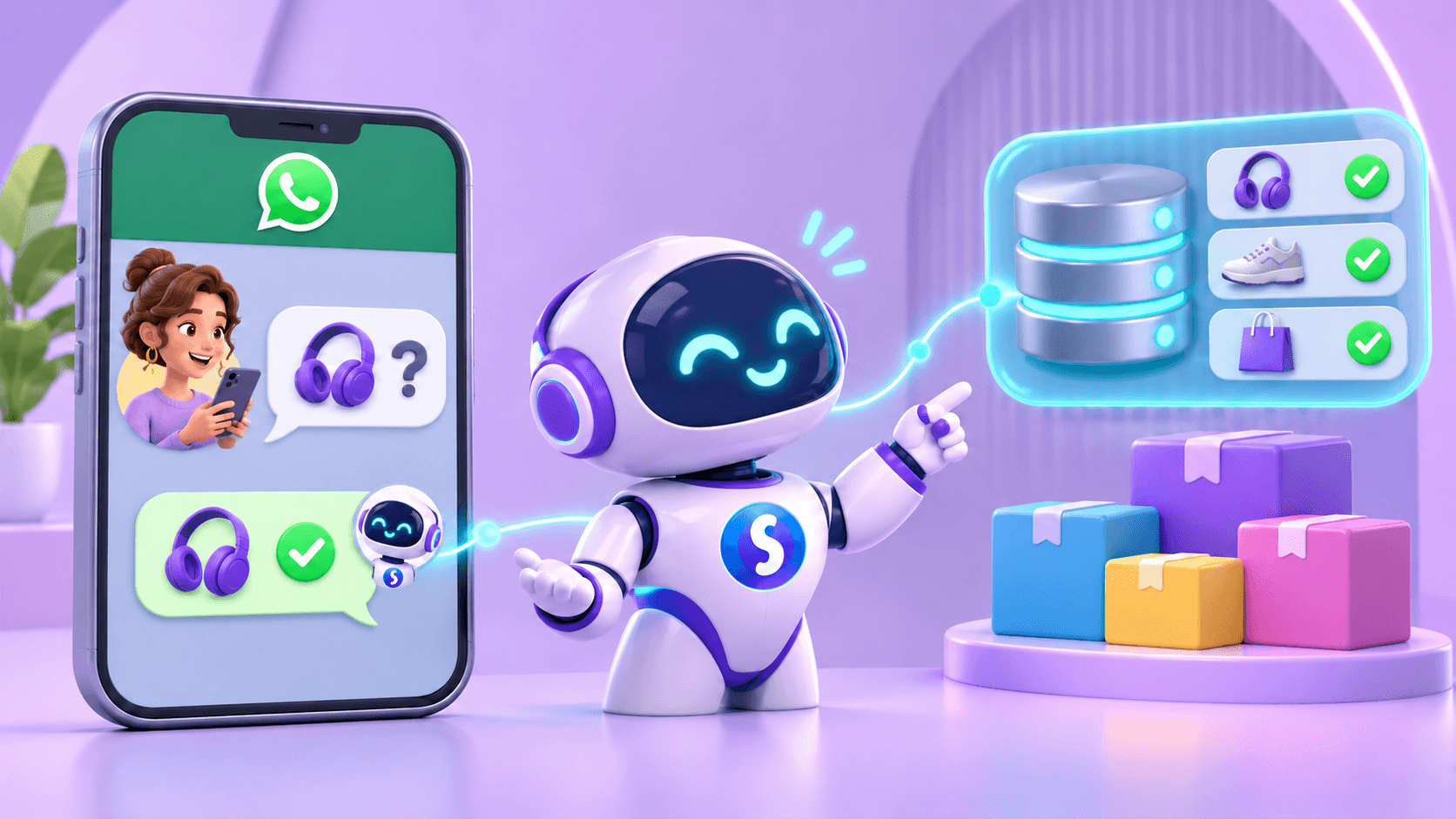
The channel passes the message to the application; the agent interprets it; a scoped tool queries the ERP or inventory system. The tool returns a structured result—product, variant, availability, location and status—and the agent writes a reply under predefined business rules.
The integration must enforce authentication, permissions, error handling and personal-data controls. A chat message should not open unrestricted access to every database table. How to connect an AI agent to an ERP explains connector boundaries in more detail.
Automation must follow the current WhatsApp Business Messaging Policy, including the conditions for business-initiated conversations, message templates and human support paths. Review the applicable rules when configuring the channel.
When to hand over to a person
Handoff is useful when the product cannot be identified, availability depends on an exception, a customer requests a reservation or the integration fails. It also makes sense when the discussion requires price negotiation, combining inventory across locations or resolving a complaint.
The handoff should retain context: product sought, variant, requested quantity, last verified fact and outstanding questions. The customer should not have to repeat the conversation. If the team is unavailable, say when someone may respond; do not imply that a person is already present.
Failure cases to test before launch
A pilot should include mistyped codes, informal product names, similar variants, sold-out products, stock at multiple sites, delayed updates, system outages and messages with more than one intention. Compare each reported quantity and condition with the actual source.
Track correct product identification, queries without verifiable data, handoffs and answers later corrected by staff. There is no universal response time or guaranteed improvement. Results depend on the channel, inventory quality and workflow.
An appropriately qualified response
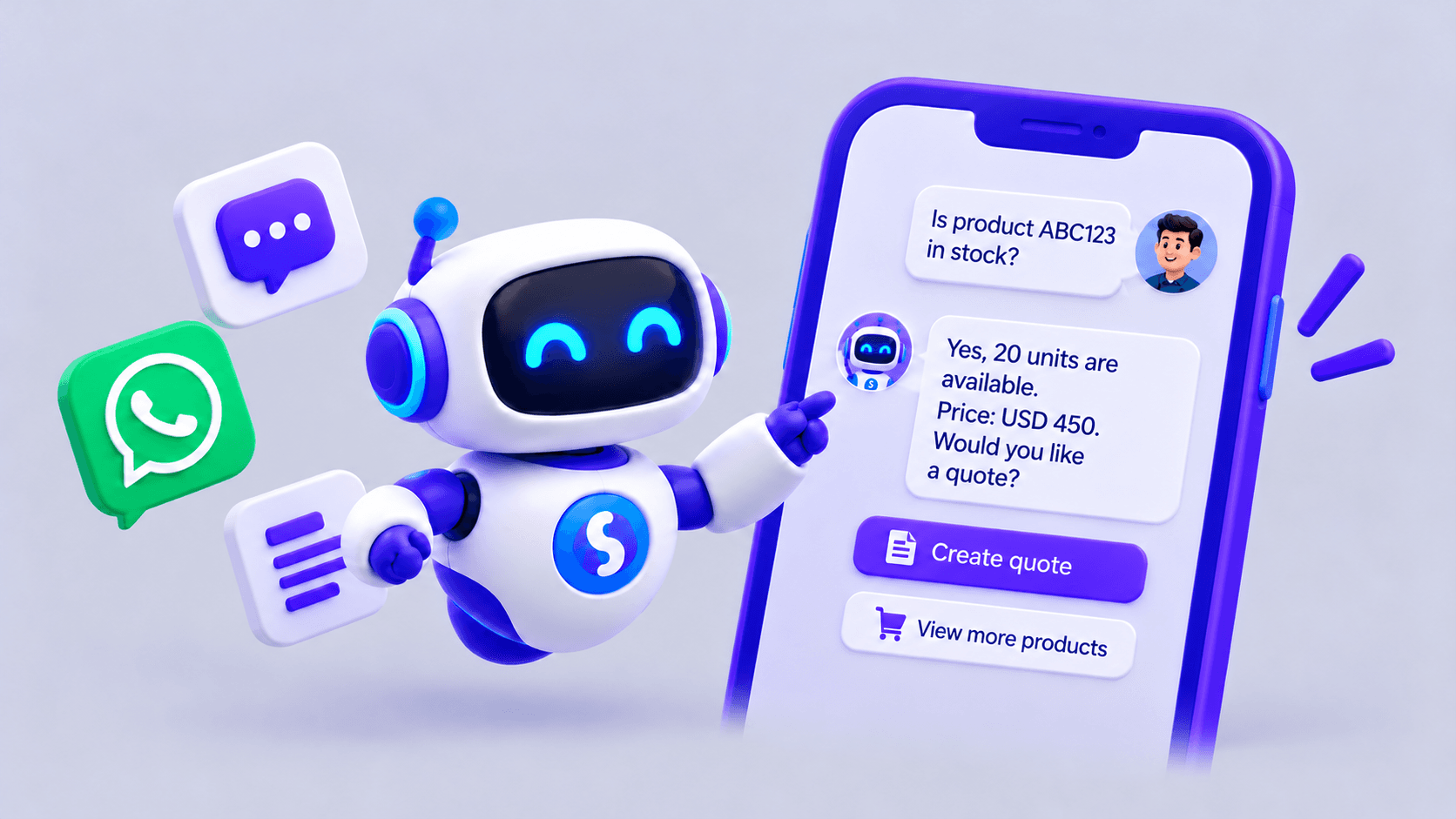
If the source returns enough sellable units for the requested code, an answer could be: “I found product ABC123, and the system shows availability for the requested quantity at the time of this check. Pickup tomorrow needs confirmation from the team.” If the business chooses to expose exact quantities, it must first define which units count and who may see that detail.
If the inventory lookup fails, the answer should say so: “I cannot verify availability right now. I can pass your request to the team for confirmation.” The agent should not present a previous result as if it were current.
How SabioIA can support this flow
SabioIA can receive WhatsApp questions and connect to business systems through available integrations or custom development. For stock inquiries, the implementation defines which source to query, what may be shown, when to clarify a product and how to hand over to a person. The final availability result depends on the inventory source and permissions set for that business.
Frequently asked questions
Can this work without an ERP?
Yes, if another reliable inventory source is available through an authorized integration. A spreadsheet may support a small pilot, but its update frequency and access control must fit the intended use.
Can AI reserve units from WhatsApp?
Only if a reservation operation exists and its identity, permissions, expiry and confirmation rules are clear. Looking up stock and reserving it are separate actions.
What if stock changes after the answer?
Treat the answer as a point-in-time check, not a permanent guarantee. A sales or delivery promise needs a reservation or transactional confirmation mechanism.